

Veeam VBR 13 upgrade – optimal upgrade path
In this article, we will perform a Veeam VBR upgrade from v12 to v13.
The prerequistes of Veeam VBR 13 upgrade are the following:
- Run at least Veeam 12.3.2.4165
- Take a backup of the Veeam VBR VM or snapshot
- Minimum 28GB available on the drive where Veeam is installed (usually C:\) – the official documentation is mentionning 9GB but we had to resize the virtual disk.
- Have the Veeam license file available (to browse the license.lic file during the upgrade procedure)
- Disable all Veeam jobs

Microsoft .NET prerequisite is installed by Veeam itself.
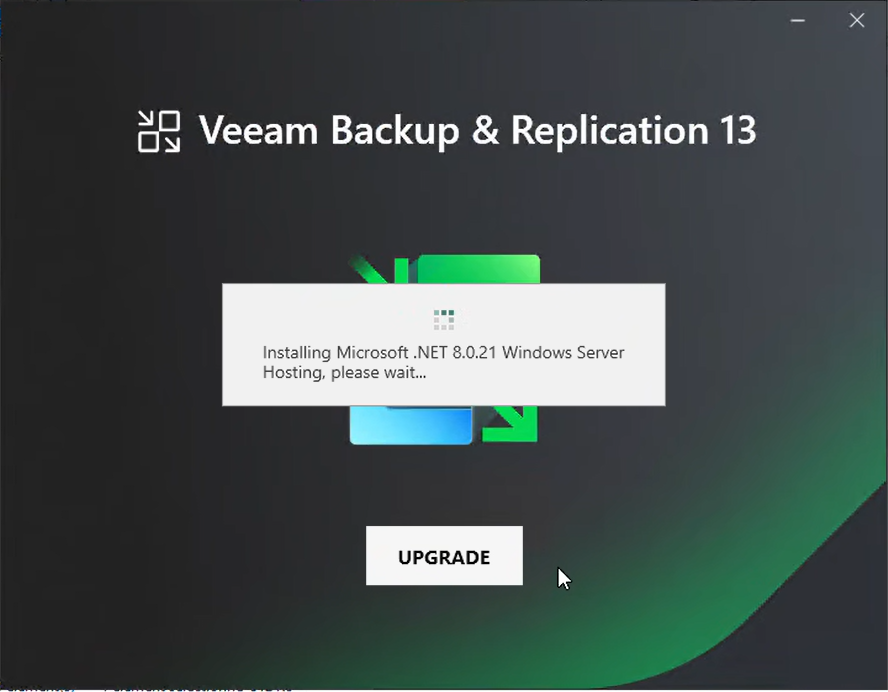
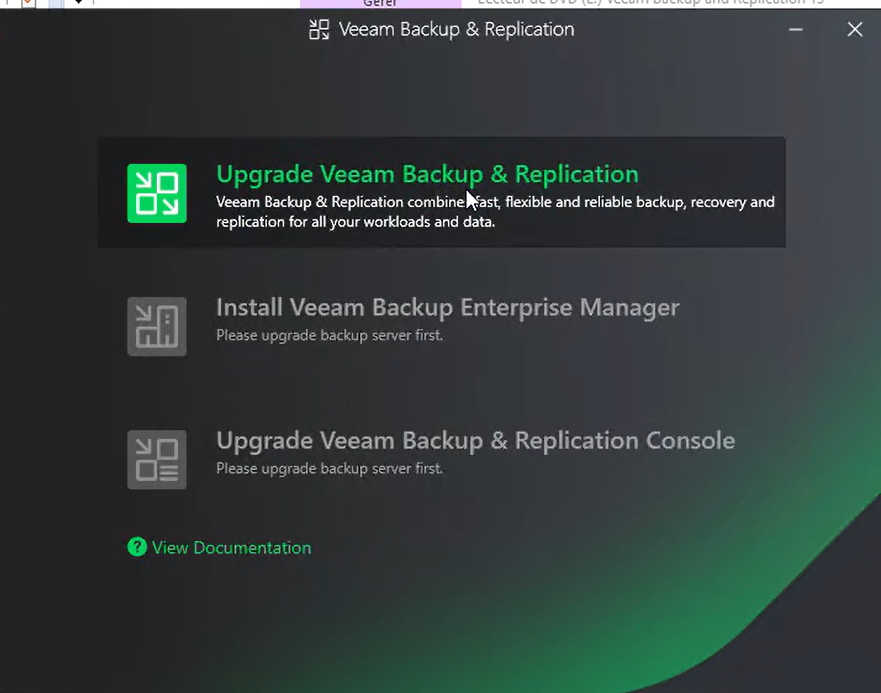
We had an error linked to Veeam services. Stop all the Veeam services.


We had to stop the service “Veeam Backup Server Restful API service” manually.
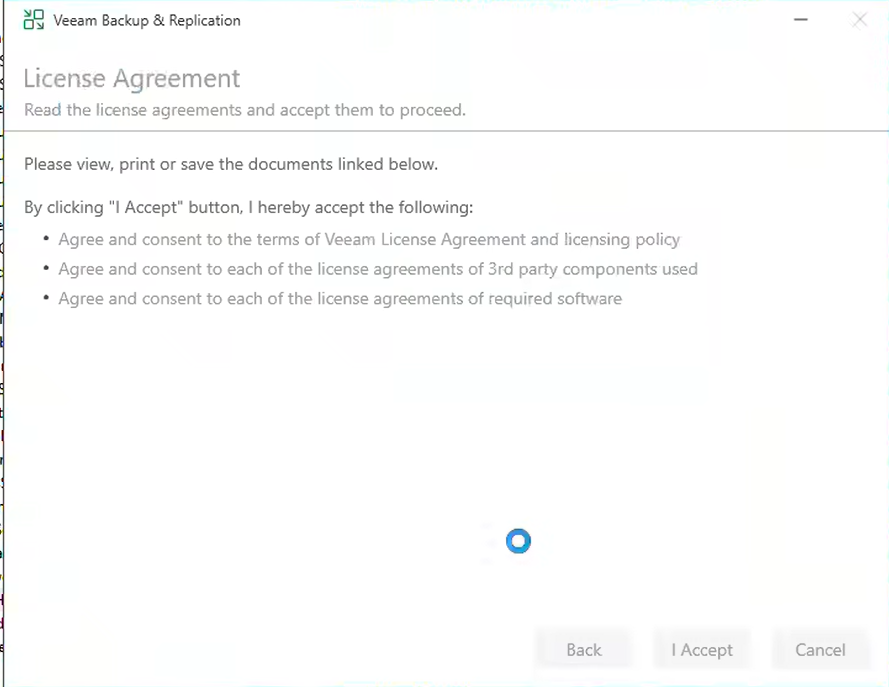
Browse the Veeam license file (.lic)


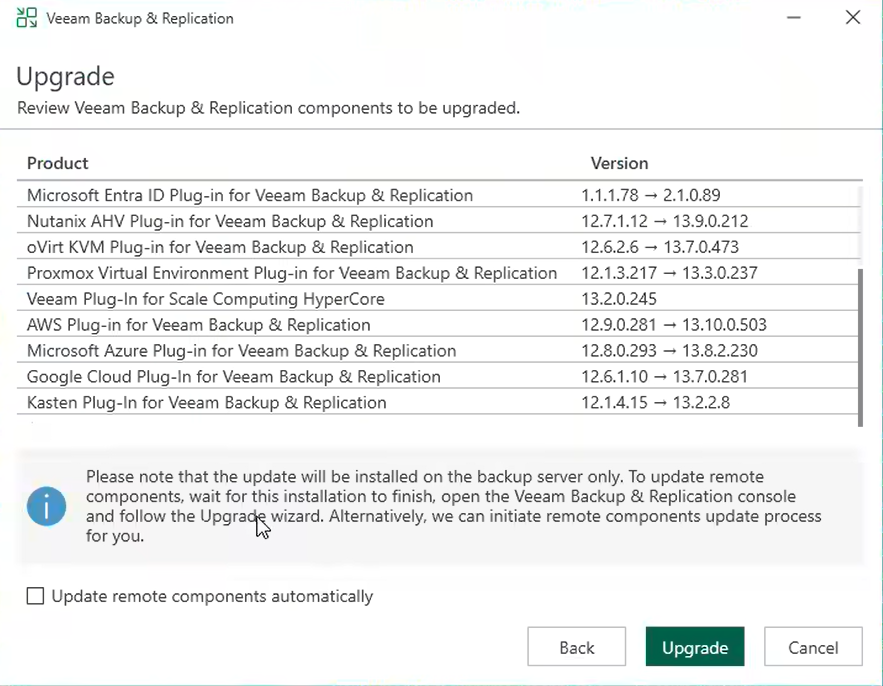
We prefer to upgrade manually, it’s about the Veeam agent and the upgrade on the hypervisors.

A Veeam service Veeam is stuck, keep in status “Stopped”. We will kill it manually, find the PID of the service and kill it (cmd.exe – run as administrator) using the command
taskkill /f /pid <PID>
You can find the PID by checking the task manager.


We were facing a second major issue: “23505: Violation of PRIMARY KEY constraint”; in our case the installation has been done in French so the message is “23505: la valeur d’une clé dupliquée reompt la contrainte unique “hosts.deployersvcrestrictedmode_pkey”.

We had to open a case at support cause it was not possible to find a solution to this problem on the Veeam forum. The problem was due because in “Backup Infrastructure”, there was a duplicate entry (once with DNS name and another one with the ip). We deleted the duplciated and the problem was fixed.
Once the duplicated entry was removed, we relaunched the installation and the upgrade was done succesfully.
Veeam Consulting Services by OFEP
OFEP provides expert Veeam consulting services to help organisations design, upgrade, and operate robust backup and disaster recovery platforms aligned with business and regulatory requirements. Whether you are deploying Veeam for the first time or optimising a complex existing environment, OFEP ensures that your data protection strategy is reliable, scalable, and secure.
Our consultants support companies throughout the full Veeam lifecycle, from architecture design to advanced configuration and operational handover. We assist with Veeam Backup & Replication upgrades, performance tuning, license optimisation, and migration projects, ensuring minimal disruption to production systems. Particular attention is given to RPO and RTO objectives, workload criticality, and compliance constraints.
OFEP has strong expertise in complex Veeam setups, including hybrid and multi‑cloud environments (on‑premises, Azure, AWS), large‑scale virtual infrastructures (VMware, Hyper-v and Proxmox), and heterogeneous workloads. We design advanced architectures with immutable backups, hardened repositories, off‑site replication, and air‑gapped copies in accordance with the 3‑2‑1‑1‑0 rule. Our teams also configure application‑aware backups for critical systems such as SQL Server, Oracle, Active Directory, and Linux workloads.
Beyond technical implementation, OFEP focuses on operational excellence. We deliver detailed documentation, backup policies, monitoring and reporting configuration, and recovery testing scenarios. We also assist IT teams in improving restore procedures, ransomware resilience, and audit readiness, ensuring that backups are not only taken but can be restored when it matters most.
By combining deep Veeam expertise with real‑world infrastructure and security experience, OFEP enables organisations to transform backup into a strategic resilience capability rather than a simple technical component.
Backup as a Key Requirement for NIS2 and CyFun
Under the NIS2 Directive and the Belgian CyFun framework, reliable backup and recovery capabilities are no longer an IT best practice but a regulatory requirement. Organisations must demonstrate their ability to ensure service continuity, recover critical systems after incidents, and limit the impact of cyberattacks such as ransomware. Poorly designed or untested backups are increasingly considered a governance and risk management failure. A robust Veeam backup architecture—featuring immutable backups, clear retention policies, documented restore procedures, and regular recovery testing—directly supports NIS2 obligations around business continuity, incident response, and resilience. OFEP helps organisations align their backup strategy with NIS2 and CyFun expectations, ensuring both technical effectiveness and audit‑ready compliance.